Chest Hair Cinema #1 - Barbie (2023)
Chest Hair Cinema #1 - Barbie (2023)
Preamble:
Late in 2023 my therapist and I began a focus on masculinity and masculine energy. While I can freely admit I'm as much of a dude bro as anyone else can be, I've never been the step in, take charge and immediately take over an entire room I just walked into. I've always errored on the side of caution when it comes to matters of gender; as I've always felt that assuming the relationship was something more than it was had far more risk than assuming it was far less than it was. This assumption; has of course, lead to a number of missed opportunities throughout life, but that's neither here nor there.
As we worked through what is generally considered healthy and unhealthy masculinity, I began; as I often do, to focus on masculinity in media and how men in general are portrayed either positively or negatively. I started thinking "This might make a fun an interesting blog series." and sometime later (nearly a year in fact) after the idea first came to mind, this series is finally seeing the light of day. Many factors were taken into consideration for what this series is and what it is not. One aspect that has always been locked in from the initial conception was the topic of the first series entry. A thorough and insightful exploration into masculinity and the role it plays in culture. This series: exploring modern masculinity, had to begin with a discussion of Ken from Barbie (2023).
Yes, really.
Expectations:
Like all of my discussions of media, I'm working under the assumption you've experienced the media in question. I despise plot summary as a general rule. I consider it lazy and meaningless. I wouldn't want someone else's interpretation of the plot to be puked down my throat like worms to a baby bird and I definitely wouldn't want to be the one doing the regurgitation. By all means, feel free to continue reading if you haven't seen Barbie (2023), just know I'm writing as though you have and you may not follow my point completely otherwise.
Early Ken:
Only one word can effectively describe Ken in the early film. Ken is a simp. Ken's sole source of validation comes from Barbie; specifically stereotypical Barbie. The film outright tells us this saying something to the effect of "Ken only has a good day if Barbie looks at him." This the first of many times the film tells us that Ken; as he appears now, is not someone to be taken seriously. Mr. Mattel tells us when he's trying to coerce Barbie back into the box "Ken isn't something we're worried about...ever." The sentiment is reinforced by Ugly Betty (fuck you, she'll always be Ugly Betty no matter what role America Ferrera is playing, and literally, even having just screened this film, if you held a gun to my head and threatened to kill me unless I told you her character's name, well I had a good run) when she tells Barbie "Don't tell him, but I never got a Ken." and Barbie responds "That's because Ken is totally superfluous!" Both women have this exchange with ear-to-ear smiles on their faces.
Ken doesn't fare much better in the real world. He's not allowed to exercise his male privilege in any meaningful way. He does, however, have a woman literally ask for the time of day. This of course inspires and empowers enough to build his Kendom.
Post Real-World Ken:
With his newfound confidence, Ken has made some changes, namely the fact that he doesn't give two shits about Barbie. He transforms the Barbie Dream House into Ken's Mojo Dojo Casa House. He has the respect of his peers (the other Kens) and the other Barbie's also seem to be enjoying their new world under "Patriarchy". With all their roles and responsibilities shed, the Barbie's have reverted to just having fun and living their lives with fun and interesting dudes. The film even goes to great lengths to tell us that the new Kendom is a hit in the real world, with Mojo Dojo Casa Houses going out by the truckload and a just green lit "The Ken Movie" is already a mega hit in pre-production. In short, everyone's life is better, except for Stereotypical Barbie... this somehow makes Ken the villain for the remainder of the runtime. This is; of course because Ken is no longer a simp, rather he's more of a fuckboy.
That's not to say that Ken doesn't have some very masculine moments in this section. His scolding of Barbie is absolutely brilliant when he calls her out on her hypocrisy.
"Out there I was somebody. When I walk down the street people respected me just for who I am!"
"This is MY Mojo Dojo Casa House. Not Barbie's Mojo Dojo Casa House. How's that feel? It's not fun, is it?"
If the movie ended here, it's a pretty transformative tale. However, one of the few things Barbie (2023) does correctly as a film in its final act is make it's point about male insecurity and its role in toxic masculinity.
Fuck Boy Ken:
The final act demonstrates why you can't really "fake it till you make it" with masculinity or any other personality trait, because sooner or later, there's always a return to the mean. The Kens insecurity allows them to be manipulated by the rapidly "deprogrammed" Barbie mob to the point where they are effectively pitted against one another in combat. Ask any two boys between the ages of 8 and 14 who are fighting over the same girl how this works. At the end of the day, usually neither of them gets the girl and they end up with bloody noses and hurt feelings for no good reason. In this circumstance, the distraction allows the Barbie's to retake control of Barbieland and return the Ken's to afterthought status.
Sasha: "There are Kens too?"
Barbie: "There are many Kens"
Sasha: "Where do all the Kens live?"
Barbie: "I don't know."
Self-Aware Ken:
Ken: "I just don't know who I am without you.
Barbie: "You're Ken"
Ken: "But it's Barbie AND Ken. There's no just Ken. That's why I was created. I only exist within the warmth of your gaze. Without it, I'm just a little blond guy who can't do flips."
(later)
Barbie: "You'll have to figure out who you are without me.... Maybe all the things that made you, aren't really you."
I'm Just Ken
Honestly, one of the major delays in writing this blog was deciding if I needed to rescreen the film and do a full character analysis on Ken, or if simply revisiting "I'm Just Ken" would be sufficient. While I obviously chose the former, I easily could fill another entire entry with an exploration of "I'm Just Ken" as it just hits differently if you're a man who's ever been friend zoned or otherwise felt like you weren't good enough to accomplish your goals. It's also why the final lines almost always cause me to squeeze out a tear or two.
"I'm just Ken (and I'm enough)
And I'm great at doing stuff
So, hey! Check me out, yeah, I'm just Ken
My name's Ken (and so am I)
Put that manly hand in mine
So, hey! World, check me out, yeah, I'm just Ken
Baby, I'm just Ken (nobody else, nobody else, nobody)"
Final Takeaways
I've always classified males in three different groups:
The Alpha Male is the traditionally manly bad ass. The man's man men want to be and women want to be with. Much like obscenity, you can't really define it, but you definitely know it when you see it.
The Beta Male is the exact opposite. He's an overly sensitive pansy who spends too much time weeping and complaining to truly be effective at anything.
The Omega Male is a beta male who carries himself like an Alpha, but in all actuality is highly insecure and unsure of his place in the world. I used to consider this the worst of the three. But now I'm not so sure that this definition applies to just about all of us.
Ken doesn't fit into any of these roles. He's literally an accessory. He means as much to stereotypical Barbie as anything else in her world does, which is not at all. She is the center of this universe because the universe says so, and literally Ken's journey and self-discovery literally upsets this environment to the point where he is presented as the villain (though I have long argued Barbie in many ways is the villain in her own movie) when really all he's doing is taking a terrible approach at finding himself.
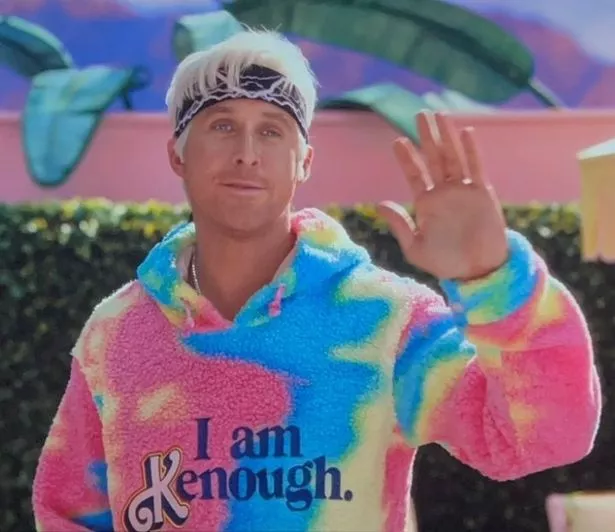
The best lesson a man can learn from Ken, is perhaps best expressed in Ken's final appearance on screen:

Comments
Post a Comment